
As a freelancer in Algeria, managing your cash flow well is one of the key skills to guarantee the stability and sustainability of your business. Unlike an employee, you are responsible for all facets of your finances: billing, savings, expenses, taxes. Poor management can lead to late payments or even the closure of your business. Conversely, effective management gives you financial freedom, peace of mind and allows you to grow your business.
Here are 5 essential tips for managing your freelance cash flow in Algeria.
Tip 1: Choose your status wisely from the start
When you start freelancing in Algeria, the first important decision is the choice of your legal status. This choice will have an impact on your cash management, your tax obligations, your commercial credibility.
Self-entrepreneur status (auto-entrepreneur.anade.dz)
For several years, Algeria has implemented a specific status for freelancers: the self-employed status, open to all independents.
-
100% online registration on the official website: https://www.anae.dz
-
Very low registration fees (a few thousand DA)
-
Simplified declaration
-
Temporary exemption or reduction of certain tax and parafiscal charges
-
Ideal for: developers, graphic designers, community managers, translators, consultants...
👉 Today it is the simplest and most used status for starting freelance in Algeria.
Other possible statuses:
-
Natural person (liberal activity): suitable for certain regulated professions
-
Sole proprietorship (EI): offers more flexibility for deducting expenses, but requires more formalities.
-
EURL, SARL: for freelancers wishing to structure a larger activity (team, business development, multi-clients).
Key Tip:
👉 Go through an accountant or a specialized firm to be well supported and choose the right status. This will help you avoid mistakes that can later be costly.
Tip 2: Calculate the costs that the company can cover
An essential aspect of cash flow management is knowing what expenses you can deduct or pass on to your business.
Here are the main deductible professional expenses for an Algerian freelancer:
-
Internet & Telephone: professional portion (often 50% to 100%) deductible
-
Rent of an office or coworking space: fully deductible
-
Electricity: portion used for deductible work
-
Computer hardware (PC, printer, software): 100% deductible
-
Professional travel expenses (taxi, interwilaya transport, fuel): deductible
-
Professional training: also deductible.
Practical tips:
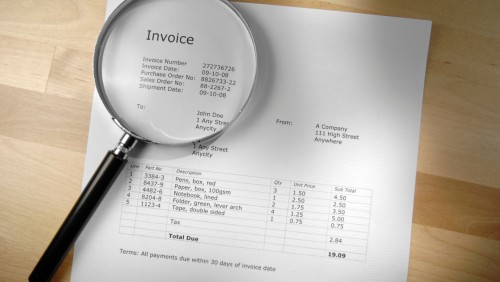
✅ Systematically keep all your invoices and supporting documents.
✅ If you use your home to work, calculate the professional/personal proportion and deduct pro rata.
👉 By optimizing the management of these costs, you reduce your tax base and improve your net cash flow.
Tip 3: Set your “salary” based on your expenses
As a freelancer, you do not receive an automatic salary. It is therefore crucial to clearly define how much you need to pay yourself each month to live comfortably, while leaving a healthy cash flow in your business.
Here is a simple method:
1️⃣ Calculate your monthly personal expenses that cannot be reduced: rent, food, transportation, education, health, leisure, savings.
2️⃣ Add a safety margin (10% to 20%) for unforeseen events.
3️⃣ Calculate the total and determine how many billable days per month you need to work to reach this amount.
👉 Example: if you need 100,000 DA net/month, and your TJM is 8,000 DA/day, you will need approximately 15 billed days/month to cover your needs + professional charges + security.
Hint:
Don't forget to build up a cash reserve for slow periods (ideally 2 to 3 months of expenses in reserve).
Tip 4: Learn about the Balance Sheet and Income Statement
Even if you work alone, understanding the basics of the balance sheet and the income statement is fundamental to correctly managing your finances.
-
The balance sheet tells you what you own (assets) and what you owe (debts, liabilities). It’s a snapshot of your financial situation.
-
The income statement tells you your income, expenses and net income over a given period.
Why it matters:
✅ You identify the expense items to optimize
✅ You monitor the evolution of your profits
✅ You anticipate financial risks
✅ You gain credibility with your partners (banks, customers, investors).
👉 Train yourself! Online courses or sessions with an accountant are a great investment.
Tip 5: Invest part of your earnings for the future
As a freelancer, you are also responsible for your financial future:
-
retirement,
-
sickness safety,
-
long-term projects.
👉 Consider investing part of your winnings:
✅ In savings (passbook, home savings plan, etc.)
✅ In diversified investments (real estate, shares, companies).
✅ In the development of your professional skills.
Key Tip:
Don't wait until you have "lots of cash" to start investing. Even small, regular amounts will allow you to build capital over time.
Conclusion
In summary, proactive and rigorous management of your freelance cash flow is the key to your financial independence.
Reminder of the 5 pillars:
✅ Choose the right status (self-employed on anae.dz)
✅ Optimize the coverage of professional expenses
✅ Intelligently define your "salary"
✅ Master financial tools (balance sheet, income statement)
✅ Invest for prepare for the future.
👉 By applying these principles, you will be able to work freelance in Algeria with more peace of mind, develop your business and build a solid financial future.